Showing posts with label donating clothes. Show all posts

Sunday, January 11, 2015

Ten Steps to Cleaning out Your Closet

Is your closet overflowing?  Are you running out of room to put all those new sweaters and accessories you received over the holidays?  Follow these ten steps to clean out your closet.

  1. Pull everything out of your closet and sort accordingly.  Put all dress slacks together, jeans together, turtlenecks together, etc. Complete outfits, such as a suit, can stay together as a unit.
  2. Only clothes and accessories belong in your closet.  That means no wrapping paper, framed art work, skeins of yarn or old tax returns.  If you can’t wear it, move it.
  3. Evaluate every category.  How many of each do you need?  There is no magic number.  Your lifestyle will determine this.  If you’re a professional, you’ll need more dress pants and blouses than a technician who wears a uniform to work.  If you only dress up occasionally, then you don’t need four formals and twelve dresses.
  4. What fits?  Weight often fluctuates, but that doesn’t mean you need a wardrobe in three sizes (current weight, and up/down a size).  Keep what you’re wearing now.  Get rid of the rest.
  5. What do you like?  How many items in your closet are things your family gave you as gifts, but you don’t like?  Why is it taking up room, when that space could be utilized by something you love. 
  6. What looks good on you?  Maybe the color isn’t quite right for you, or a skirt is too long for your short frame.  If you don’t feel flattered, then don’t keep it. 
  7. Set up donation box as you sort.  Drop in all those pieces that don’t fit, you don’t like and don’t look good on you.  Someone else will be happy with it!
  8. Replace the articles of clothing back into the closet according to category.  Store all sweaters together, skirts together, tees together, etc.  You can further sort by season, keeping short-sleeve tops separate from long-sleeve, for example.
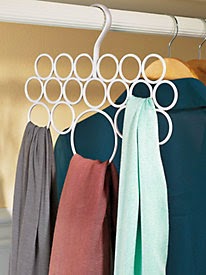
  9. Purchase organizers for accessories.  Hanging bags are useful for purses, shoes, and sweaters.  There are hangers designed specifically for accessories such as scarves, belts and jewelry.  See photos for examples.  This will keep things sorted and easy to find
  10. Keep to the “One in, one out” rule in the future.  If you bring a new pair of jeans home, get rid of an old pair.  If you buy new shoes, find a pair you don’t wear anymore and get rid of them.  This will keep your closet from getting overcrowded.


Remember, you use 20 percent of what you own 80 percent of the time.
  Find that 20 percent and get rid of the rest!

Tuesday, April 24, 2012

Storing Off-season Clothes


Tips for Tuesday

It seems like we had our Spring/Summer in March and now it's back to Fall, despite the fact the calendar says "April".  If we pulled out our summer clothes last month, hopefully we didn't store our winter clothes yet, because we still need them.  But when it does finally warm up for good, we'll have to store our sweaters and coats.  Here are some tips for storing your off-season clothes:

·         Clean and repair everything before storing.  This includes zippers, buttons and stains.

·         If it won't fit your children next year, then don't keep it.  Hand it down or donate it.

·         Get rid of stray mittens/gloves.

·         To keep whites from fading, wrap them in white tissue paper, then in a dark color to keep out the light.

·         Store in plastic tubs rather than cardboard boxes to deter rodents and bugs.

·         Furs should be cleaned and stored professionally.

·         Leather shoes/boots should be cleaned and moisturized.  Dry thoroughly before storing. 

·         Stuff leather boots and shoes with newspaper or tissue so they don't get crushed.

·         Clean salt and dirt from snow boots before storing.

·         Clean and moisturize your leather handbags, then stuff them with paper to retain their shape.

·         Cedar lined closets or boxes work well against moths.  If you don't have a cedar closet, then use lavender sachets or moth balls to deter moths.

·         Sweaters should be stored folded rather than on hangers to retain their shape. 

·         Remove clothes from dry-cleaning bags if your storage space is damp (basement, attic).  Moisture may build up inside the bag and cause mold or mildew.

·         Fold wool blankets and store them in a cedar-lined chest.

Thursday, June 16, 2011

Places to Donate Clothes

Senior Thursday

Last week, we had you sort through your closet and decide which of your work clothes you didn't need in your retirement years. But what do you do with that pile?

You can:
1. Donate them to your favorite charity. There are several that pick up from your front door, or many have donation drop-off sites. These include The Salvation Army, The Cancer Federation, Goodwill, Amvets and Habitat for Humanity.

2. Donate them to a Women's shelter or to a thrift store supporting women's shelters. This would include places such as your local YWCA and Home of the Sparrow.

3. Donate them to a charity that puts women back in the work force such as Dress for Success.

4. Take them to a local consignment shop. Most consignment shops will set up an appointment with you to go through your clothes. They only take certain garments at certain times of the year, and they have to be in excellent condition. If they do not sell your items after a certain period of time, you can take them back or the store will donate them to a local charity.

5. Sell them online. If you have high-end label clothes, they sell well on sites such as eBay and Craig's List. This takes time and costs money. Determine beforehand if the time you spend will be worth it.

6. Distribute them among family members and friends.

7. If they are in poor condition, throw them away.