Showing posts with label cleaning. Show all posts

Sunday, January 11, 2015

Ten Steps to Cleaning out Your Closet

Is your closet overflowing?  Are you running out of room to put all those new sweaters and accessories you received over the holidays?  Follow these ten steps to clean out your closet.

  1. Pull everything out of your closet and sort accordingly.  Put all dress slacks together, jeans together, turtlenecks together, etc. Complete outfits, such as a suit, can stay together as a unit.
  2. Only clothes and accessories belong in your closet.  That means no wrapping paper, framed art work, skeins of yarn or old tax returns.  If you can’t wear it, move it.
  3. Evaluate every category.  How many of each do you need?  There is no magic number.  Your lifestyle will determine this.  If you’re a professional, you’ll need more dress pants and blouses than a technician who wears a uniform to work.  If you only dress up occasionally, then you don’t need four formals and twelve dresses.
  4. What fits?  Weight often fluctuates, but that doesn’t mean you need a wardrobe in three sizes (current weight, and up/down a size).  Keep what you’re wearing now.  Get rid of the rest.
  5. What do you like?  How many items in your closet are things your family gave you as gifts, but you don’t like?  Why is it taking up room, when that space could be utilized by something you love. 
  6. What looks good on you?  Maybe the color isn’t quite right for you, or a skirt is too long for your short frame.  If you don’t feel flattered, then don’t keep it. 
  7. Set up donation box as you sort.  Drop in all those pieces that don’t fit, you don’t like and don’t look good on you.  Someone else will be happy with it!
  8. Replace the articles of clothing back into the closet according to category.  Store all sweaters together, skirts together, tees together, etc.  You can further sort by season, keeping short-sleeve tops separate from long-sleeve, for example.
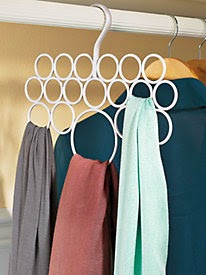
  9. Purchase organizers for accessories.  Hanging bags are useful for purses, shoes, and sweaters.  There are hangers designed specifically for accessories such as scarves, belts and jewelry.  See photos for examples.  This will keep things sorted and easy to find
  10. Keep to the “One in, one out” rule in the future.  If you bring a new pair of jeans home, get rid of an old pair.  If you buy new shoes, find a pair you don’t wear anymore and get rid of them.  This will keep your closet from getting overcrowded.


Remember, you use 20 percent of what you own 80 percent of the time.
  Find that 20 percent and get rid of the rest!

Friday, July 20, 2012

Green Cleaning-General Uses for Salt, Part 1


Frugal Friday


So many cleaning products on the market are full of dangerous chemicals that can harm both the environment and your health.  They are also expensive.  So why not look to the past for both inexpensive and healthier alternatives?  Over the next few weeks, we're going to look at ways to use common household products to clean your home.  This week, we'll look at general uses for plain old table salt.

·         Soak clothes in salty water as soon as possible to get rid of bloodstains.

·         Make a paste of salt, vinegar and flour to clean copper, brass and pewter.

·         Use to clean a stained coffeepot or mug.

·         Soak sponges and cleaning cloths in salty water to freshen.

·         Soak enameled pans in salty water, then boil salt water to remove dried on food.  Do NOT use on chipped pots or metal pots.

·         Soak discolored glass in a salt and vinegar solution to remove stains.

·         Remove odors from drains by running hot salt water through them.

·         Add salt to the water in your washing machine to remove soap scum and hold colors.

·         Mix salt and lemon juice to remove mildew.

·         If you spill something in your oven, pour salt over the liquid, then let the oven cool.  The mess will form into a dry, light crust that will wipe up easily.

Friday, June 29, 2012

Green Cleaning—Uses for Lemons Around the House

Frugal Friday

So many cleaning products on the market are full of dangerous chemicals that can harm both the environment and your health.  They are also expensive.  So why not look to the past for both inexpensive and healthier alternatives?  Over the next few weeks, we're going to look at ways to use common household products to clean your home.  This week, we'll look at using lemons around the house.

·         Use as an air freshener.  Slice a lemon in half and place it cut side up on a plate near an open window.  Or boil lemon slices in water.

·         Make a paste of lemon juice and salt to clean brass, copper or stainless steel.  Let sit for five minutes before rinsing with warm water.

·         Put lemon juice on a rag and dust your ceiling fan blades.  This will kill the invisible microbes and spores.

·         Shine chrome with lemon rind, then polish with a soft cloth.

·         If your fireplace fumes are unpleasant, throw some lemon rinds into the fire to burn.

·         Mix the juice of one lemon with one teaspoon olive oil and one teaspoon water, then use it as furniture polish.  Use immediately after mixing.

·         Dip a sliced lemon in salt, then rub on marble to treat stains.  Rinse thoroughly to get rid of the acid.

·         Place a few drops of lemon juice into your vacuum cleaner bag before vacuuming to freshen the air.

·         Mix lemon juice and water to clean wood floors that haven't been varnished. 

Friday, June 22, 2012

Green Cleaning – Using Lemons in the Laundry Room


Frugal Friday


So many cleaning products on the market are full of dangerous chemicals that can harm both the environment and your health.  They are also expensive.  So why not look to the past for both inexpensive and healthier alternatives?  Over the next few weeks, we're going to look at ways to use common household products to clean your home.  This week, we'll look at using lemons in the laundry room.

·         Lemons are a natural bleaching agent.  For white garments or linens, squeeze lemon juice on the stain, then let it dry in the sun.  Do not use on silk!
·         Add one cup lemon juice to the washing machine for tee shirts and underpants to get rid of stains and deodorize.
·         For whites that can't be bleached, add a small amount of lemon juice to the start of the wash cycle.
·         Squeeze lemon juice on raspberry or red currant stains, then launder as usual.
·         Mix lemon juice and salt, and rub on mildew stains.  Dry the garments in the sun.  Repeat until the stain is gone.
·         Make a paste of lemon juice and salt to get rid of rust stains on clothes.
·         For stubborn stains, mix vinegar and lemon juice, then soak the stain for 30-60 minutes.
·         For really white socks, boil them in water with a sliced lemon.

Friday, June 15, 2012

Green Cleaning—Uses for Lemons in the Bathroom


Frugal Friday


So many cleaning products on the market are full of dangerous chemicals that can harm both the environment and your health.  They are also expensive.  So why not look to the past for both inexpensive and healthier alternatives?  Over the next few weeks, we're going to look at ways to use common household products to clean your home.  This week, we'll look at using lemons in the bathroom.

·         Cut a lemon in half and place it cut-side up in a bowl in the bathroom for a natural, fresh smell.
·         Squeeze lemon juice on bathtub rings for easy cleaning.
·         Squeeze lemon juice onto grout and scrub with a toothbrush to brighten it.
·         Spray a solution of water and lemon on your mirror, then wipe with newspaper for a streak-free shine.
·         Spray a mixture of water and lemon juice on your shower doors, scrub with newspaper and rinse.
·         Soak a paper towel in lemon juice, wrap the towel around your faucet and let it sit for an hour to loosen the build-up.  Scrub with a stiff toothbrush.
·         Make a paste of lemon juice and borax, apply to the stains in your toilet bowl, let sit for a few hours, then scrub clean. 

Tuesday, June 5, 2012

What Can You Do With Spare Buttons?


Tips for Tuesday


Do you have a lot of spare buttons around the house?  Maybe they are from your grandmother's sewing basket.  Perhaps they are from your mother's dresses and coats.  Or maybe they are strays from your own clothing. 

Whether they are from a blouse or a pair of slacks, what can you do with them?  If they are in good condition, it's silly to throw them away.  So what do you do?  Here are some ideas.

·         Give them to a seamstress who might need just one or two of a kind for a project.
·         Give them to a crafter—single or multiples, they can be used in a variety of projects.
·         Use them to hold pairs of post earrings.
·         Put a magnet on the back and use them on your refrigerator to hold notes.
·         Put a thumbtack on the back and use them on your bulletin board.
·         Dump a colorful collection into a glass mason jar and use as a decoration.
·         String them into a bracelet or necklace.
·         Glue them to frames for a personalized look.
·         Sell vintage collections on eBay.

What have you done with spare buttons?

Friday, June 1, 2012

Green Cleaning—Using Lemons in Your Kitchen


Frugal Friday


So many cleaning products on the market are full of dangerous chemicals that can harm both the environment and your health.  They are also expensive.  So why not look to the past for both inexpensive and healthier alternatives?  Over the next few weeks, we're going to look at ways to use common household products to clean your home.  This week, we'll look at using lemons in the kitchen.

  • Rub cut side of lemon on aluminum pots and pans, then buff with soft cloth to brighten.
  • Squeeze lemon juice over door thresholds and other cracks where ants could come in.  Also scatter lemon slices around the outdoor entrance.
  • Simmer a lemon slice in water for 15 minutes to loosen burned-on food.
  • Add a tablespoon of lemon juice to one cup of milk to make buttermilk.
  • Rub the cut side of a lemon on your cutting board to sanitize.
  • Place lemon juice in the soap compartment of your EMPTY dishwasher and run as usual to sanitize.
  • Dab lemon juice onto a cotton ball or rag, and let sit in your refrigerator overnight to deodorize.
  • Mix three tablespoons of lemon juice to 1¾ cups water, microwave on high for five to ten minutes, allowing the steam to condense.  Food particles will wipe away.
  • Pour lemon juice and alum powder onto your porcelain sink and scrub to remove stains.
  • Mix lemon juice and baking soda to scrub stained plastic food containers.  Let sit overnight if stains are stubborn.
  • Toss lemon peels into your garbage disposal to deodorize.
  • Squeeze lemon juice onto your countertops to remove stains.  Don't leave on for too long, as lemons have a bleaching agent.

Friday, May 25, 2012

Green Cleaning—General Uses for Baking Soda

Frugal Friday

So many cleaning products on the market are full of dangerous chemicals that can harm both the environment and your health.  They are also expensive.  So why not look to the past for both inexpensive and healthier alternatives?  Over the next few weeks, we're going to look at ways to use common household products to clean your home.  This week, we'll look at using baking soda in the around the house.

·         Using a 2:1 ratio of baking soda to vinegar, use on aluminum shower door frames.
·         Sprinkle baking soda onto a cut lemon to use on brass.
·         Use baking soda on wet spills on the carpet.  After the baking soda absorbs the liquid, sweep it up.  Then mix baking soda and water to clean the area.  Dry thoroughly before vacuuming.
·         Use baking soda with warm water to clean up vomit on carpets.
·         Mix with water to remove crayon stains.  Rinse thoroughly with hot water.
·         Mix with warm water to clean floors.
·         Sprinkle inside rubber gloves to slip them on easier, and absorb odors and moisture.
·         If you spill a liquid on a book, sprinkle baking soda on the pages, then let them dry in the sun.
·         Mix with warm water to wipe down vinyl chairs.

Always test items in inconspicuous areas before cleaning.

Friday, May 11, 2012

Green Cleaning—Using Baking Soda in the Bathroom

Frugal Friday

So many cleaning products on the market are full of dangerous chemicals that can harm both the environment and your health.  They are also expensive.  So why not look to the past for both inexpensive and healthier alternatives?  Over the next few weeks, we're going to look at ways to use common household products to clean your home.  This week, we'll look at using baking soda in the bathroom.

·         Removable shower traps can be soaked in baking soda and warm water.  Adding vinegar increases its effectiveness.
·         Make a paste of baking soda and vinegar, then use a rag to wipe soap scum off the shower and sink.  Rinse with cold water.
·         Use the same paste for wiping the base of your faucets.
·         Pour baking soda into your toilet bowl and let sit for a while.  Stains should disappear.
·         Make a paste of two parts baking soda to one part vinegar.  Using an old toothbrush, scrub the pink mildew off your tile and grout.
·         Sprinkle baking soda into your toilet tank once a month.  Let sit overnight, then flush for freshness.
·         If you store damp items like facecloths, rags or old toothbrushes under the sink, place an open box of baking soda under your sink to absorb the odors.
·         Make a paste of 2:1 baking soda and vinegar, then use a damp rag and solution to clean the scum off your shower doors.  Use an old toothbrush to get into the corners.
·         Take down your shower curtain, sprinkle 4 or 5 tablespoons of baking soda on a brush, then wipe down the curtain in your bathtub.  Rinse with hot water and hang to dry.

Friday, May 4, 2012

Green Cleaning—Using Baking Soda in the Kitchen


Frugal Friday


So many cleaning products on the market are full of dangerous chemicals that can harm both the environment and your health.  They are also expensive.  So why not look to the past for both inexpensive and healthier alternatives?  Over the next few weeks, we're going to look at ways to use common household products to clean your home.  This week, we'll look at using baking soda in the kitchen.

·       Baking soda in various strengths can be used in the kitchen for cleaning.  The more dried on the food, or the greasier the spot, the stronger the solution should be.  Baking soda can be used in a food processor or blender, the garbage can, oven, stovetop, dishwasher, or coffeemaker.
·      Baking soda is also good for deodorizing.  Use it in baby bottles, your refrigerator, your drain, water bottles, vacuum flasks, garbage disposal.  Always wash and rinse thoroughly with warm, soapy water after deodorizing.
·        Make a paste to clean coffee stains from mugs.
·        Wipe stainless steel appliances with a baking soda mixture to remove stains and spots. 
·        Combine with vinegar to clean cast iron skillets/casseroles.
·        Remove melted plastic bags from counters or appliances with a water/baking soda solution.
·        Do NOT use on non-stick pans.
·        Note:  Make sure all appliances and pots/pans are cooled off before cleaning.

Friday, April 27, 2012

Green Cleaning—Using Vinegar for Cleaning

Frugal Friday

So many cleaning products on the market are full of dangerous chemicals that can harm both the environment and your health.  They are also expensive.  So why not look to the past for both inexpensive and healthier alternatives?  Over the next few weeks, we're going to look at ways to use common household products to clean your home.  This week, we'll look at using vinegar around the house.

·         Mix 1 cup vinegar to 1 gallon water and brush it on your carpets to brighten the color.
·         Mix 4 tbsp. vinegar to 1 gallon water in your carpet cleaner to rinse after shampooing.
·         Mix vinegar and water in a spray bottle—spritz your shower curtain every day to prevent mildew.
·         Spray bathroom surfaces with vinegar mixture to disinfect.
·         Mix 1 part vinegar to 10 parts water for soaking brassware. 
·         Mix equal parts vinegar and water, drop in your shower head, and boil for five minutes to remove build-up.  (Remove rubber gasket before boiling.)  Or soak in same mixture overnight without boiling.
·         Pour one gallon of vinegar to your whirlpool tub and run.  Do this once a year to keep pipes free of residue.
·         Pour vinegar down your drains when they seem sluggish.
·         Put vinegar on newspaper to clean windows and glass fireplace screens.
·         Add 2/3 cup vinegar to 1 gallon water to wash vinyl floors.
·         Mix equal parts water and vinegar to remove lime deposits on tile and grouting.
·         Rub a cloth dipped in a vinegar/water solution on water stains to remove them from leather.
·         Spray vinegar on a cloth and wipe leather furniture to revive its shine.

Friday, April 13, 2012

Green Cleaning—Uses for Vinegar in the Laundry Room

Frugal Friday

So many cleaning products on the market are full of dangerous chemicals that can harm both the environment and your health. They are also expensive. So why not look to the past for both inexpensive and healthier alternatives. Over the next few weeks, we're going to look at ways to use common household products to clean your home. This week, we'll look at using vinegar in the laundry room.

• Run water through your iron to clear out residue build-up. When the iron is still warm, run it across your ironing board to freshen the cover.
• Rub a paste of vinegar and baking soda into cuffs and collars to get rid of stains.
• Add vinegar to loads of dark clothing to keep colors bright, prevent colors from running, and also to deodorize the clothes.
• Soak shirts in vinegar to remove underarm stains and odors.
• Use to remove stains—cola, grease (from suede), tar from jeans, grass, coffee, tea, fruits and berries.
• Use to remove odors, such as bleach or smoke.
• Add vinegar to your rinse cycle to soften the fabric and reduce static cling.

Next week: Using vinegar in the kitchen.

Friday, April 6, 2012

Green Cleaning—Uses for Borax

Frugal Friday

So many cleaning products on the market are full of dangerous chemicals that can harm both the environment and your health. They are also expensive. So why not look to the past for both inexpensive and healthier alternatives. Over the next few weeks, we're going to look at ways to use common household products to clean your home. The first of these is borax.

• Put 2 teaspoons in a spray bottle with very hot water to use as a general purpose cleaner.
• Use to clean aluminum, as it is non-abrasive. Rinse thoroughly.
• Soak filters from hoods in a strong solution for 15 minutes to loosen grease and odors.
• Put 1 tablespoon in four cups of warm water to use in your refrigerator or freezer to wipe up food spills.
• Mix one tablespoon with one tablespoon of baking soda as a detergent in your dishwasher.
• Sprinkle borax on carpets, dog beds and other areas where there might be fleas.
• Mix one gallon warm water with six tablespoons borax and a teaspoon of liquid detergent for cleaning your floors and walls.
• Sprinkle it at base of walls to deter mice.
• Sprinkle in your toilet and let sit overnight for easy cleaning of grimy build-up.
• Sprinkle 2-3 teaspoons into your garbage disposal and let sit for 15 minutes. Rinse with hot water to deodorize.
• Sprinkle in stinky shoes and let them sit overnight.
• Add a tablespoon to your washing machine to deodorize your clothes.