Showing posts with label closet organizing. Show all posts

Sunday, January 11, 2015

Ten Steps to Cleaning out Your Closet

Is your closet overflowing?  Are you running out of room to put all those new sweaters and accessories you received over the holidays?  Follow these ten steps to clean out your closet.

  1. Pull everything out of your closet and sort accordingly.  Put all dress slacks together, jeans together, turtlenecks together, etc. Complete outfits, such as a suit, can stay together as a unit.
  2. Only clothes and accessories belong in your closet.  That means no wrapping paper, framed art work, skeins of yarn or old tax returns.  If you can’t wear it, move it.
  3. Evaluate every category.  How many of each do you need?  There is no magic number.  Your lifestyle will determine this.  If you’re a professional, you’ll need more dress pants and blouses than a technician who wears a uniform to work.  If you only dress up occasionally, then you don’t need four formals and twelve dresses.
  4. What fits?  Weight often fluctuates, but that doesn’t mean you need a wardrobe in three sizes (current weight, and up/down a size).  Keep what you’re wearing now.  Get rid of the rest.
  5. What do you like?  How many items in your closet are things your family gave you as gifts, but you don’t like?  Why is it taking up room, when that space could be utilized by something you love. 
  6. What looks good on you?  Maybe the color isn’t quite right for you, or a skirt is too long for your short frame.  If you don’t feel flattered, then don’t keep it. 
  7. Set up donation box as you sort.  Drop in all those pieces that don’t fit, you don’t like and don’t look good on you.  Someone else will be happy with it!
  8. Replace the articles of clothing back into the closet according to category.  Store all sweaters together, skirts together, tees together, etc.  You can further sort by season, keeping short-sleeve tops separate from long-sleeve, for example.
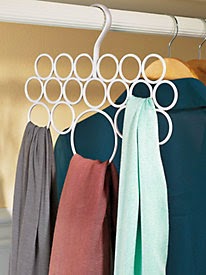
  9. Purchase organizers for accessories.  Hanging bags are useful for purses, shoes, and sweaters.  There are hangers designed specifically for accessories such as scarves, belts and jewelry.  See photos for examples.  This will keep things sorted and easy to find
  10. Keep to the “One in, one out” rule in the future.  If you bring a new pair of jeans home, get rid of an old pair.  If you buy new shoes, find a pair you don’t wear anymore and get rid of them.  This will keep your closet from getting overcrowded.


Remember, you use 20 percent of what you own 80 percent of the time.
  Find that 20 percent and get rid of the rest!

Tuesday, November 27, 2012

Using Your Doors for Storage

Tips for Tuesday


We’ve all seen storage racks for the door.  They can be used for shoes in your closet or mud room.  They can be used to hold towels in the bathroom or spices in the pantry.  But there are many more uses for door storage if you think outside the box.

For example, those shoe pockets come in handy for flip flops, but how about using it for hair accessories, small stuffed animals or socks for your child.  And those pantry racks are useful for canned goods, but they can hold paperback books, DVDs or accessories in your teen’s room. 

Here are more ideas for over-the-door storage:

·        Several towel bars can hold extra blankets and linens.

·        Hooks can hold purses and handbags

·        Small hooks inside a cabinet can hold measuring spoons.

·        Use pockets for a family communication center--mail, mp3 players, notepads,dog leashes, etc.

·        Use pockets inside your pantry to hold spices, small bags of food, plastic bags, etc.

·        Use a rack for giftwrap storage.

·        Use a rack or pockets for craft supplies.

·        Use “S” hooks to hold umbrellas.

What have you stored on your door? 


Tuesday, September 4, 2012

Tips for Organizing Small Homes


Tips for Tuesday


When space is at a premium, finding a home for everything can be a challenge.  Even if you’ve de-cluttered and pared down your belongings, sometimes there just doesn’t seem to be enough room.  Here are some tips you can use in any area of your home to maximize use of the space.


·         Think vertical – Tall, narrow shelves use up less floor space. 

·         Install shelves on the walls wherever possible. This includes bedrooms and bathrooms as well as living spaces.

·         Hang hooks and organizers from the ceiling.  This is especially useful in kitchens and garages.

·         Use the backs of doors for shelving or pocket organizers. 

·         Use space under your cabinets for spice racks, utensil racks, etc.

·         Use the space under furniture (beds, sofas, etc.) for storage.  There are plastic containers built specifically for this purpose.

·         Purchase multi-purpose furniture-storage ottomans, storage benches, etc.

·         Install or place organizers in cabinets (wire racks, pull-out drawers, etc.) to maximize storage space.

·         Install hooks in small spaces to hold coats, belts, leashes, aprons, etc.

Tuesday, June 5, 2012

What Can You Do With Spare Buttons?


Tips for Tuesday


Do you have a lot of spare buttons around the house?  Maybe they are from your grandmother's sewing basket.  Perhaps they are from your mother's dresses and coats.  Or maybe they are strays from your own clothing. 

Whether they are from a blouse or a pair of slacks, what can you do with them?  If they are in good condition, it's silly to throw them away.  So what do you do?  Here are some ideas.

·         Give them to a seamstress who might need just one or two of a kind for a project.
·         Give them to a crafter—single or multiples, they can be used in a variety of projects.
·         Use them to hold pairs of post earrings.
·         Put a magnet on the back and use them on your refrigerator to hold notes.
·         Put a thumbtack on the back and use them on your bulletin board.
·         Dump a colorful collection into a glass mason jar and use as a decoration.
·         String them into a bracelet or necklace.
·         Glue them to frames for a personalized look.
·         Sell vintage collections on eBay.

What have you done with spare buttons?

Tuesday, May 22, 2012

Tips for Tuesday

How you organize your shoes (or anything for that matter) in your home, depends on your individual situation.  Closet size, number of pairs, number of family members, habits, religious beliefs, etc., all play a part in how you can store your shoes.

The first step in organizing your shoes is to get all of them out in one place.  Pair them, and sort them by color and/or style (casual, dressy, work, etc.).  Once they are all laid out, you will see how many pairs of black pumps you have, how many running shoes, how many brown leather sandals, etc.  Seeing them all together will help decide what you really need to keep, and what can be donated. 

When deciding what to keep, think about use and comfort.  Just because a pair you bought five years ago is one of your favorites, if you never wear them because they are uncomfortable, then it's time to donate them.  GO through every color and style, and see where you can pare down.  Once you're done sorting, you'll see what's left to go back in your closet. 

Arrange your shoes by the way you would look for them.  For instance, would you look for a black pair of shoes when getting ready for work?  Then keep all your black shoes together.  Or do you think in terms of function?  Would you look for a pair of comfy shoes for work in the morning?  Then place all work shoes together.  Or store them according to where you would put them on.  For instance, boots and running shoes by the back door, and dressy shoes in your closet.

There are many ways to store shoes.  The first of these is on your closet floor.  That isn't to say they should all just be tossed in.  You should purchase a shoe cubby or shoe rack and pair your shoes accordingly.  Always keep pairs together.  If the shoes are small flats, you can place more than one pair in a cubby. 


If you have closets with shelving, keep your shoes on shelves in your closet.  The shelves can be spaced closer together than they would be for sweaters and pants to make the best use of the space.  This also avoids having to stack several pairs on top of each other.


If you don't have a lot of shelving, but have plenty of hanging space, use a shoe organizer that hangs from the closet rod.  You can usually get about 10 pairs of shoes in 8 inches of hanging space. 


Another place to store shoes is on the back of a door.  There are shoe racks and pockets for this use.  Pair smaller shoes together in one pocket.  Be careful with shoe racks that may stretch out the toes of your shoes. 


Under the bed is a great place for shoes also.  There are bins and bags specifically for this purpose with dividers.  Or purchase a low, long bin and arrange the shoes on their sides, toe to heel for maximum use of space.  If you are storing shoes under the bed that you use often, look for a bin or bag on rollers so it is easy to access.


Some people don't keep shoes in their closets or bedrooms, but rather prefer keeping them in the laundry room or garage.  In this case, special shelving can be installed to house the shoes, or purchase stackable shoe cubbies. 


If you have room for a bench, purchase one that has storage and keep your shoes in or under the bench. 

Whatever you decide, it is important that all family members are on board, and everyone puts their shoes away after wearing them.  Because even the best systems won't work if you don't use them.

How many pairs of shoes do you have, and how do you store them?

Tuesday, April 24, 2012

Storing Off-season Clothes


Tips for Tuesday

It seems like we had our Spring/Summer in March and now it's back to Fall, despite the fact the calendar says "April".  If we pulled out our summer clothes last month, hopefully we didn't store our winter clothes yet, because we still need them.  But when it does finally warm up for good, we'll have to store our sweaters and coats.  Here are some tips for storing your off-season clothes:

·         Clean and repair everything before storing.  This includes zippers, buttons and stains.

·         If it won't fit your children next year, then don't keep it.  Hand it down or donate it.

·         Get rid of stray mittens/gloves.

·         To keep whites from fading, wrap them in white tissue paper, then in a dark color to keep out the light.

·         Store in plastic tubs rather than cardboard boxes to deter rodents and bugs.

·         Furs should be cleaned and stored professionally.

·         Leather shoes/boots should be cleaned and moisturized.  Dry thoroughly before storing. 

·         Stuff leather boots and shoes with newspaper or tissue so they don't get crushed.

·         Clean salt and dirt from snow boots before storing.

·         Clean and moisturize your leather handbags, then stuff them with paper to retain their shape.

·         Cedar lined closets or boxes work well against moths.  If you don't have a cedar closet, then use lavender sachets or moth balls to deter moths.

·         Sweaters should be stored folded rather than on hangers to retain their shape. 

·         Remove clothes from dry-cleaning bags if your storage space is damp (basement, attic).  Moisture may build up inside the bag and cause mold or mildew.

·         Fold wool blankets and store them in a cedar-lined chest.

Monday, April 2, 2012

Making the Most of Closet Space

Moving On Monday

When you move into a new home, you may or may not have the same closet space. If you are downsizing, the closets may be smaller. If you are moving up, you may have a walk-in closet. Perhaps you will have another reach-in closet, but it may or may not come with anything more than one rod at eye level.

If your new closet is nothing more than a rod and shelf, there are ways to maximize the space without a big dollar investment. Here are some ideas:

• Add a shelf above the existing shelf to use the space up to the ceiling.
• Hang all the short clothes in one place so you can use the floor space under them.
• Buy an extender and hang it from the rod to gain another rod underneath.
• Purchase canvas organizers to hang from the rod. Use for sweaters or shoes.
• Use the back of the door for scarves, belts, or shoes.
• Use cascading hangers for skirts, pants, blouses (multiple clips on one hanger).
• Use empty wall space for hooks. Hang robes, belts, etc. from hooks.
• Install a valet rod to hold clothes for airing out.
• Place a small chest of drawers in the closet if you have enough space.

Friday, March 2, 2012

Stretching Your Wardrobe

Frugal Friday

Clothing can be very expensive, especially if you want it to last for a while. With the cost of utilities and gas rising, the money you have to spend on clothing is decreasing. But with wise decisions, you can have a nice wardrobe that will last for years to come.

• Don't buy into fads and fashion. Keep to the classics that never go out of style, such as that little black dress or black heels.
• Keep your wardrobe to two or three basic colors. Use cool or warm colors that coordinate based on your skin tone. Add in the neutrals--black, beige and white to round out the selection.
• Use accessories to change your look, rather than more expensive shirts or pants. A colorful scarf, earrings or belt can create a whole new look.
• Buy good quality items/fabrics that will last many years.
• Use light layers under expensive sweaters or jackets to absorb odors and oils. You won't have to clean your clothes as often.
• Launder your items inside-out to preserve color.
• Store your off-season clothes in temperature-controlled areas. Do not store them in humid or damp areas, especially if they are in plastic bins, which retain moisture.

Friday, February 17, 2012

Saving Money on Kid's Clothing

Frugal Friday

We love our children, but they can really put a drain on our bank accounts. It costs a lot of money to raise them--food, clothing, education. So we try to save money wherever we can. One way to save money is on their clothing. Here are some tips to keeping them clothed and still have money to spare.

• Buy clothes slightly larger than their size. You can hem sleeves and pants, then let them down when your children grow.
• Find friends and family with children older than yours. Ask for hand-me-downs. Then find a family with children younger than yours and return the favor.
• Dress them for the occasion. If your children will be outside playing, dress them in darker colors to hide the dirt/stains.
• Don't wash their clothes as often. They will last longer. This may mean not letting them change their outfit several times a day, and not letting them throw something in the hamper that they only wore for a few hours.
• Bleach will wear down fabrics. Use detergents with non-chlorine bleach instead.
• Don't cave into the pressure of designer clothes. They are overpriced.
• Search clearance racks at the end of a season and purchase clothes in a larger size for the next year.
• Shop at consignment stores. You can find great deals on nice clothes.

Tuesday, January 17, 2012

What Can You Do in Two Minutes?

Tips for Tuesday

One of the most common excuses for not being organized is not having enough time. But what if I told you that you needed only two minutes to be on your way to getting organized? Mind you, not completely organized, but on your way. After all, it took weeks, months or even years to accumulate your clutter. It won't go away in two minutes. But you can get on top of the situation.

How many times have you had two minutes of free time? Maybe you were waiting for the water to boil on the stove. Or you were on hold with your utility company. Maybe you were waiting for your child during their doctor's appointment. All of these are opportunities to do something useful.

There are lots of little things you can do in ten minutes. Here are a few ideas to get you started.
• Go through your wallet and remove the old coupons and receipts.
• Go through your fridge and look for expired or spoiled food.
• Go through your pantry and look for expired food products.
• Go through your medicine cabinet and look for expired medications.
• Delete some old emails from your Inbox.
• Flip through a magazine and tear out the articles you want to read. Recycle the rest.
• Go through a dresser drawer and pull out clothes you don't like or don't fit.
• Line up the shoes in your closet, and get rid of a pair or two.
• Delete old messages on your answering machine or cell phone.
• Remove expired coupons from your fridge door.

These are just a few things you can do in two minutes. What other tasks can you think of to add to the list?

Friday, January 6, 2012

What Not to Wear for Seniors--A Matter of Taste

Senior Thursday
As we age, it's tempting to dress to look younger. But there is a fine line between taste and class. Taste, you can buy. Class, you can not. While it's tempting to buy the latest fashion trends to look like a twenty-something, that isn't the best of taste. You can still look fashionable dressing your age. This is class.

Items like little black dresses and simple lines will always be in style. Platform shoes and padded shoulders will not. When cleaning out your closet, keep the timeless items, but get rid of these:

• Mini-skirts and short shorts
• Thigh-high boots
• Sweatpants with words on the rear end
• Low-rise pants
• Anything see-through
• Anything from your high school or college days
• Pajama pants and slippers outside your house
• Sweaters and tops with plunging necklines

Class is timeless. You will look younger by NOT dressing younger.

Thursday, June 9, 2011

Retirement Means a Whole New Wardrobe

Senior Thursday

As we age, our lives and needs change. Retirement is one of the biggest changes in your life. Not only are you home all day, but you are wearing different clothes now. No more business suits, dressy blouses, or ties. Your wardrobe is now jeans, tees and loafers.

So what do you do with all those clothes? You don't need them taking up precious space in your closet.

You'll want to keep a few items for special occasions, but you can safely get rid of the rest.

Go through your closet and decide which are your favorite pieces. Look at the rest. Are they in good condition? Then donate them. If they are stained or ripped, then discard them.

If they are designer clothes, you might consider selling them. It all comes down to how valuable your time is, and how much money you need.

Tune in next week for resources on donating/selling your clothes.